Free Sample

Apply Now

CN

×

keywords:

xxxx1 xxx2 xxx3 xx4 copy
Shenzhen Meiyad Optoelectronics Co., Ltd. Shenzhen Meiyad Optoelectronics Co., Ltd.

XR Virtual LED Wall: Driving the Next Generation of Immersive Display Solutions

XR Virtual LED Wall: Driving the Next Generation of Immersive Display Solutions

11
10
2022


XR Virtual LED Wall Emerges as a New Growth Engine for the LED Display Industry


With the rapid development of digital content creation, film and television production, and real-time rendering technologies, XR virtual production has become one of the most important emerging applications in the LED display industry.


As content creators continue to seek more efficient and immersive production methods, XR Virtual LED Walls are transforming traditional workflows by combining high-performance LED displays with virtual environments. This technological evolution is creating new opportunities for LED display manufacturers while accelerating the development of immersive digital experiences.


From film production and advertising to live broadcasting, exhibitions, and entertainment events, XR-based LED display solutions are expanding the boundaries of traditional display applications and becoming a key driver of industry growth.


The Rise of XR Virtual Production and LED-Based Content Creation


The growth of XR virtual production is closely connected with the transformation of the global content creation industry. In recent years, traditional filming methods have faced increasing challenges, including complex production environments, location limitations, and rising costs.


Against this background, XR virtual production technology has gained significant attention due to its ability to seamlessly integrate virtual scenes with real-world environments.


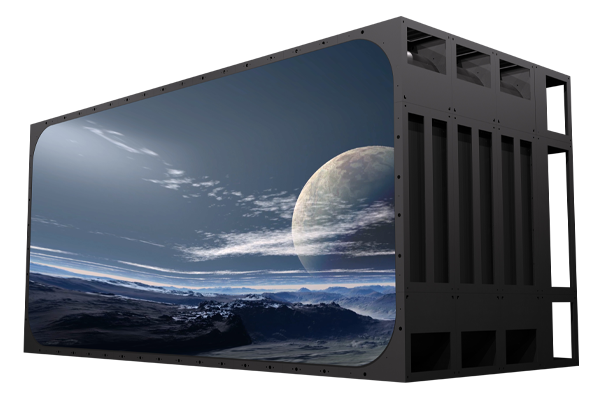
XR Virtual LED Walls


By using advanced Virtual Production LED Screens, creators can display digital backgrounds in real time while capturing realistic lighting, reflections, and visual effects directly on set. Compared with traditional green-screen workflows, XR virtual production provides a more intuitive creative experience, improves production efficiency, and reduces the complexity of post-production.


Today, XR virtual production has become an important application area for LED display technology, driving demand for high-resolution, high-refresh-rate, and high-performance LED solutions.


From XR Studios to Immersive Display Solutions


The development of XR technology is also accelerating innovation across the broader immersive display market.


Beyond traditional XR studios, LED technologies are being applied to a wider range of immersive environments, including immersive LED screens, LED caves, and LED dome screens.


An immersive LED screen creates large-scale visual environments that allow audiences to experience highly engaging digital content. These solutions are widely used in digital exhibitions, museums, entertainment venues, brand experiences, and interactive spaces.


Immersive Tunnel LED Screen


A LED cave provides an enclosed immersive environment by surrounding users with LED displays on multiple surfaces. This type of solution is increasingly adopted for virtual production, simulation, education, research, and advanced visualization applications.


Immersive LED CAVE


Meanwhile, LED dome screens are opening new possibilities in areas such as planetariums, science education, immersive entertainment, and large-scale digital presentations by delivering panoramic and highly immersive visual experiences.


LED Dome Screen


Together, these technologies represent the evolution from traditional display products toward comprehensive immersive display solutions.


XR Virtual LED Walls Driving Industry Growth


Many leading LED display companies have accelerated their investment in XR virtual production solutions as market demand continues to grow.


ROE, a subsidiary of Unilumin Technology, is one example of a company that has established a strong presence in the XR virtual production market. Founded in 2006, ROE entered the XR virtual LED wall business in 2017 and has developed solutions for global virtual production applications.


According to available industry data, ROE achieved operating revenue of RMB 1.362 billion in 2021, while Unilumin Technology reported total revenue of RMB 7.2299 billion during the same period. In the first half of 2022, ROE achieved operating revenue of RMB 818 million, compared with RMB 3.165 billion in total revenue reported by Unilumin Technology.


ROE’s XR virtual production solutions have been deployed in multiple international projects, including the PXO & WFW Vancouver studio, which achieved a Guinness World Record, and ILM’s StageCraft virtual production studio, known for its work on The Mandalorian.


At the same time, other LED display manufacturers have also expanded their XR technology capabilities. Absen began developing XR virtual LED display technologies in 2019 and launched its PR series products specifically designed for XR virtual production applications in the film and television industry in 2021.


Absen’s XR virtual production solutions have been successfully applied in virtual studios, XR stages, and production facilities across countries including the United States, China, the United Kingdom, France, Russia, and Canada.


These industry developments demonstrate how XR LED technology is becoming an important pathway for LED display companies to enter higher-value application markets.


XR Virtual Production Solution


Two Major Growth Directions for XR Virtual LED Technology


1. Expanding Applications in Regional Markets


Although XR virtual production solution providers are highly concentrated in China, overseas markets have developed rapidly in terms of adoption and commercial applications.


The domestic XR virtual production market is still in an early growth stage, with significant opportunities in entertainment production, television programs, live events, and commercial filming.


In addition, industry policies supporting digital production technologies, including virtual digital shooting, cloud computing, artificial intelligence, and 5G-enabled collaboration, are providing further support for the development of XR virtual production ecosystems.


2. Expanding into More Accessible and Diverse Applications


XR virtual production initially focused mainly on large-scale film and television studios. However, traditional XR studios often require significant investment, advanced equipment, and professional technical capabilities.


As LED technology continues to improve and system costs gradually decrease, XR solutions are becoming more accessible to smaller production projects and commercial applications.


In the future, XR Virtual LED Walls and immersive display solutions are expected to expand into more scenarios, including:


  • Film and television production

  • Live streaming and broadcasting

  • Advertising and commercial content creation

  • Virtual exhibitions

  • Corporate events

  • Digital experience centers

  • Immersive entertainment venues


The application potential of XR LED technology continues to grow as industries explore new ways to engage audiences through digital experiences.


XR LED Technology Shapes the Future of Digital Experiences


XR Virtual LED Walls are no longer limited to virtual filming applications. They are becoming a core technology for creating immersive digital environments that connect real-world experiences with virtual content.


Through the integration of LED display technology, real-time rendering, and immersive content production, XR solutions are helping industries improve efficiency, enhance creativity, and deliver more engaging experiences.


From Virtual Production LED Screens and XR stages to immersive LED screens, LED caves, and LED dome screens, the evolution of LED technology is creating a broader ecosystem of immersive applications.


As the demand for digital experiences continues to increase, XR virtual LED technology will play an increasingly important role in the future development of the LED display industry.


You May Also Like

LED Tunnel Screen Guide: Design, Technology & Installation

06|11|2026

A Complete Guide to LED Tunnel Screens: Technology, Design, Selection and Installation

Immersive LED tunnel screens are transforming how people experience digital spaces. By surrounding visitors with synchronized visual content, they create engaging environments for exhibitions, entertainment venues, shopping malls, brand activations, and immersive attractions.Unlike conventional flat LED displays, an LED tunnel screen integrates multiple display surfaces into one visual environment. Depending on the design, the system may include LED walls, a ceiling display, and an LED floor screen, allowing content to extend across the visitor's entire field of view.However, building a high-quality immersive LED tunnel involves more than simply installing LED panels around a walkway. Display structure, module selection, video processing, synchronization, content mapping, power distribution, and installation safety all need to work together.This guide focuses primarily on four-sided closed-loop LED tunnel screens, a mature immersive display solution offered by Meiyad. Using a real project configuration as an example, we will explain how these systems work, what components they require, how to select the right LED modules, and what to consider during installation.1. What Is an Immersive LED Tunnel Screen?1.1 Understanding the Concept of an LED Tunnel DisplayAn immersive LED tunnel screen is a multi-surface LED display installation designed to create a continuous visual environment around visitors. Instead of viewing content on a single screen, visitors experience synchronized images across several display surfaces.A typical four-sided closed-loop LED tunnel consists of four display areas:Left wall LED displayRight wall LED displayCeiling LED displayFloor LED displayWhen these four surfaces work together, they create a surrounding visual experience that can simulate walking through underwater environments, outer space, futuristic cities, natural landscapes, or other digital scenes.The visual effect depends on more than the resolution of individual screens. Accurate synchronization, coordinated brightness and color, and carefully mapped content are essential for making the four display surfaces appear as one integrated environment.An immersive LED tunnel can be designed for permanent installations or temporary events. Its dimensions, viewing distance, pixel pitch, module type, and control system can all be customized according to the project.1.2 Three Main Types of LED Tunnel StructuresLED tunnel displays can be divided into several structural types. The most suitable design depends on the available space, desired immersive effect, budget, and installation requirements.Three-Sided LED TunnelA three-sided LED tunnel typically consists of two side walls and a ceiling display. The floor remains a conventional walking surface.This structure provides an immersive visual environment while keeping the floor construction relatively simple. It is suitable for exhibition spaces, retail environments, museums, and installations where a dedicated LED floor is not required.Four-Sided Closed-Loop LED TunnelA four-sided closed-loop LED tunnel integrates the left wall, right wall, ceiling, and floor into one display system.The addition of an LED floor allows visual content to surround visitors from multiple directions. When all four display areas are synchronized, the installation can create a more continuous and engaging immersive experience.Because different surfaces have different structural and mechanical requirements, a four-sided system may combine several LED module types rather than using the same product throughout the entire installation.360-Degree Cylindrical LED TunnelA cylindrical LED tunnel uses a curved display structure to create a continuous surrounding visual environment. Depending on the design, it may use flexible LED modules or specially arranged display panels to form a circular or cylindrical surface.This structure is different from a four-sided closed-loop tunnel, which has distinct left, right, ceiling, and floor display areas.1.3 LED Tunnel Screen vs. Projection Tunnel: Which Is Better?Both LED displays and projection systems can be used to create immersive tunnels, but they have different characteristics.ComparisonLED Tunnel ScreenProjection TunnelImage generationDirect-view LED pixelsProjected lightBrightnessGenerally suitable for brighter indoor environmentsStrongly affected by ambient light and projection conditionsSurface requirementsRequires LED modules and supporting structuresRequires suitable projection surfacesImage continuityRequires precise mapping and calibration across panelsRequires projector blending and geometric correctionInstallationInvolves display structures, power, signal, and cooling systemsInvolves projectors, mounting positions, and calibrationMaintenanceLED modules and electronic components require servicingProjectors and optical components require servicingDesign flexibilitySupports flat, curved, and multi-surface LED structuresDepends on projector placement and projection surfacesLED tunnel screens are often preferred when a project requires direct-view brightness, clearly defined display surfaces, and an integrated multi-screen structure.Projection tunnels may be suitable when the installation has specific surface or budget requirements and the lighting environment can be controlled.The best choice depends on the project's visual objectives, physical space, operating conditions, and total investment.2. How Does an LED Tunnel Screen Work?An immersive LED tunnel display combines LED modules, receiving cards, video processing equipment, signal transmission, and synchronized content playback.Understanding how these components work together helps project owners evaluate system configurations and avoid common technical problems.2.1 How LED Pixels Generate ImagesAn LED display is made up of many small light-emitting diodes arranged in a pixel matrix.Each pixel contains red, green, and blue LED elements. By controlling the brightness of these elements, the display produces different colors and forms the images and videos seen by visitors.Pixel pitch refers to the distance between the centers of adjacent pixels, usually measured in millimeters.A smaller pixel pitch generally provides higher pixel density and is suitable for closer viewing distances. A larger pixel pitch may be appropriate when visitors view the screen from farther away.For an immersive LED tunnel, pixel pitch should be selected according to the viewing distance and the visual requirements of each display surface.2.2 Signal Transmission and Image ProcessingThe content playback system sends visual signals to the LED video processor.The processor handles image scaling, canvas management and signal distribution. Output signals feed sender cards, which forward display data to LED receiving cards for each zone.The receiving cards distribute the signals to the corresponding LED modules, allowing each display area to reproduce its assigned content.For a multi-surface LED tunnel, the system must manage the relationship between different display areas. The left wall, right wall, ceiling, and floor may have different resolutions, orientations, and physical dimensions.A properly configured processing system ensures that the content is distributed to the correct display areas and maintains the intended visual composition.2.3 Multi-Channel Synchronization and Independent CalibrationSynchronization is one of the most important technical requirements of a four-sided closed-loop LED tunnel.If the left wall, right wall, ceiling, and floor display different frames at slightly different times, visitors may notice visual discontinuities, especially when the content contains fast-moving objects or continuous environmental scenes.For Meiyad's project configuration, the system uses:One professional LED video processor with four independent hardware frame-synchronized output channels.The system works through the following process:Full-content input: The complete panoramic content is sent to the professional LED video processor.Canvas division: The processor divides the content canvas according to the resolutions and layout of the four display areas.Four-channel distribution: The processor assigns the corresponding image data to the left wall, right wall, ceiling, and floor through four independent hardware output channels.Shared frame reference: All four output channels operate with the same frame clock reference to maintain synchronized playback.Independent calibration: Each channel can receive its own geometric correction, color adjustment, and brightness adjustment according to the characteristics of its display surface.Receiver card distribution: The processed signals are sent to the corresponding receiving card groups, which drive the LED modules.This architecture allows the four display areas to operate as one coordinated visual system while retaining independent adjustment for each surface.For larger installations that exceed the pixel capacity of a single processor, multiple processors can be connected through a cascading architecture. A global frame synchronization module can be used to maintain consistent timing across the entire system.2.4 Custom Content Creation and Visual Mapping for Closed-Loop LED TunnelsAn LED tunnel requires content designed for its physical structure.Ordinary videos can be used in some installations, but content created specifically for a multi-surface tunnel usually provides better visual continuity.Content designers need to consider:The dimensions and resolution of each display surfaceThe position and orientation of the left and right wallsThe curvature of the ceilingThe relationship between ceiling and floor visualsThe visitor's viewing position and movement directionThe visual transitions between adjacent surfacesFor example, a virtual waterfall may begin on the ceiling, extend down both walls, and appear to continue across the floor. To achieve this effect, the content must be mapped accurately to the physical LED layout.Proper content mapping helps reduce visual breaks and creates a more convincing immersive environment.3. Main Components of a Four-Sided LED Tunnel Display SystemA four-sided LED tunnel is a coordinated system made up of several display and supporting components. Each part must be selected according to its installation position and operating requirements.3.1 LED Floor Screen: Walkable LED Display TilesThe LED floor screen is one of the defining features of a four-sided closed-loop LED tunnel.Unlike conventional wall displays, floor LED screens must be designed for horizontal installation and potential visitor contact. They require suitable protective structures and surface treatments for the intended application.Common considerations include:Protective surface constructionSurface friction and anti-slip performanceImpact resistanceHeat dissipationModule replacement and maintenance accessLoad-bearing capacity under the intended operating conditionsFor Meiyad's featured project, the floor display uses P3.91 LED floor tiles.The floor screen is designed as a dedicated LED floor display rather than a conventional wall LED module installed horizontally.For reference, our P3.91 walkable floor tiles are rated at 1500 kg/m² static load as standard, with a reinforced die-cast aluminum version reaching up to 2000 kg/m². Detailed specifications and test-report references are covered in the project case study later in this guide.Important safety consideration: The allowable load-bearing capacity of an LED floor screen must be verified through the manufacturer's official product specifications and relevant test reports. Anti-slip performance should also be confirmed using applicable documentation. Project owners should obtain and review these documents before opening the installation to public access.The floor structure, supporting framework, and installation method must be designed according to the expected visitor traffic and applicable local safety requirements.Conventional wall‑mount LED modules must never be repurposed as walk‑on floor displays; mechanical structure and protection ratings are not designed for pedestrian loading.3.2 Flat LED Wall Screens: Left and Right Display AreasThe left and right walls of a four-sided LED tunnel are usually flat display surfaces.For these areas, conventional flat LED modules can provide a practical and cost-effective solution.In Meiyad's featured project, both side walls use P2.5 flat LED modules.A P2.5 pixel pitch provides a relatively high pixel density, making it suitable for immersive environments where visitors may view the walls from a comparatively short distance.When selecting wall LED modules, project designers should consider:Pixel pitch and viewing distanceDisplay brightness and color consistencyModule dimensions and cabinet structureInstallation and maintenance accessSignal distribution and power requirementsThe supporting structure should also maintain consistent alignment between modules to reduce visible seams and improve the overall appearance of the tunnel.3.3 Curved Ceiling LED Screen: Flexible LED ModulesThe ceiling of an immersive tunnel may be flat, curved, or designed with more complex shapes.When the ceiling has a curved structure, flexible LED modules can help follow the required surface geometry.Meiyad's featured project uses P2.5 flexible LED modules for the curved ceiling.Flexible LED modules are useful for curved display applications because their construction allows them to adapt to suitable curved installation structures. Their bending limits and installation requirements must still be followed according to the manufacturer's specifications.Importantly, a four-sided LED tunnel does not necessarily require flexible modules across every display area.A mixed-module design can be more practical:Flat LED modules for the left and right wallsFlexible LED modules for the curved ceilingDedicated LED floor tiles for the walking surfaceThis approach matches the display product to the structural requirements of each area. It can also help avoid unnecessary use of flexible modules where conventional flat modules are sufficient.3.4 Custom Steel Structure and Supporting FrameworkThe supporting structure is essential to the stability and alignment of an LED tunnel.It must accommodate the dimensions, weight, installation position, and maintenance requirements of the different display areas.A four-sided closed-loop tunnel may require different structural arrangements for its walls, ceiling, and floor.Key considerations include:Structural strength and stabilityInstallation tolerances and alignmentCeiling suspension or supporting methodsFloor support and load distributionAccess for module replacement and maintenanceCable routing and ventilation spaceStructural drawings and layout planning should be completed before manufacturing and installation.The final design should be reviewed by qualified structural professionals according to the project conditions and applicable building regulations.3.5 LED Control System and Video ProcessorThe control system coordinates the four display areas and ensures that the visual content is distributed correctly.For Meiyad's featured four-sided LED tunnel, the control architecture uses one professional LED video processor with four independent hardware frame-synchronized output channels.The four channels correspond to:Left wallRight wallCurved ceilingLED floorThe complete panoramic content enters the processor, where the display canvas is divided and distributed to the four output channels.Although the channels operate independently for image processing and calibration, they share the same frame clock reference.This allows the system to maintain synchronized playback while supporting independent adjustments for each display area.The processor can perform:Canvas division and image distributionIndependent geometric correctionIndividual color and brightness adjustmentResolution and display layout configurationSignal output to corresponding receiving card groupsFor installations with a larger total pixel load, a multi-processor cascading solution can be considered. Global frame synchronization is then used to maintain consistent timing across the processors.The final control system should be configured according to the total display resolution, content format, required frame rate, signal distance, and project layout.3.6 Power Supply, Signal Transmission and Cooling SystemsA multi-surface LED tunnel requires a properly planned power and signal distribution system.Power supplies must be selected according to the LED display configuration and the operating requirements of the installation.Signal transmission should be designed to maintain stable communication between the video processor, receiving cards, and LED modules.Thermal management is equally important. LED displays generate heat during operation, and enclosed tunnel structures can restrict natural airflow if ventilation is not properly considered.The design should include:Suitable power distribution and protectionOrganized signal cable routingAppropriate cable lengths and transmission methodsVentilation and heat dissipation arrangementsAccess for inspection and maintenanceFor indoor immersive installations, the cooling design should consider the actual operating environment and the amount of heat generated by all four display areas.3.7 Optional Interactive and Audio SystemsAn immersive LED tunnel can be expanded with interactive technologies to make the experience more engaging.Depending on the project requirements, optional systems may include:Motion sensorsTouch or proximity interactionInteractive floor effectsCamera-based visitor trackingAudio playback systemsCentralized show controlFor example, an interactive floor can display visual reactions when visitors walk across designated areas, provided the floor display and sensing system are designed for the intended use.Audio and lighting systems can also be coordinated with LED content to create a more complete multimedia experience.4. Advantages and Limitations of Four-Sided LED TunnelsFour-sided closed-loop LED tunnels offer several advantages, but they also involve technical and investment considerations.4.1 A More Immersive Visual EnvironmentBy integrating the walls, ceiling, and floor, a four-sided LED tunnel creates a surrounding visual environment rather than a conventional front-facing display.This structure is suitable for storytelling, virtual environments, brand experiences, and immersive exhibitions.4.2 High Brightness and Visual ImpactDirect-view LED displays can provide strong visual performance in indoor environments.Compared with projection systems, LED displays are generally less dependent on darkened projection surfaces. However, actual brightness, contrast, and viewing comfort should be evaluated according to the installation environment.4.3 Flexible Mixed-Module DesignA four-sided tunnel does not need to use one type of LED module throughout the entire installation.Combining flat LED modules, flexible LED modules, and dedicated floor tiles allows each area to use a product suited to its structural requirements.This can improve design flexibility and help control project costs.4.4 Modular Design and MaintenanceLED displays are generally constructed from modular components, making it possible to inspect or replace individual modules or sections when the system is designed with suitable service access.Maintenance arrangements depend on the specific LED product, cabinet structure, and installation method. Front or rear serviceability should be confirmed during the product selection and structural design stages.4.5 Interactive Content OpportunitiesWith additional sensing and control equipment, a tunnel can respond to visitor movement and other inputs.This makes it possible to create interactive exhibitions, branded experiences, and digital entertainment environments.4.6 Limitations and Project ConsiderationsDespite their visual advantages, four-sided LED tunnels require careful planning.Common considerations include:Higher initial investment than a simple single-screen installationMore complex structural engineeringMulti-channel synchronization and calibrationPower distribution and thermal managementSpecialized content production and visual mappingFloor protection and public-use safety requirementsMaintenance access across multiple display surfacesThese factors should be evaluated during the early design stage rather than after the display hardware has been selected.5. How to Choose the Right LED Tunnel ScreenChoosing an LED tunnel screen requires more than comparing pixel pitch or module prices. The display structure, viewing distance, installation environment, content requirements, and long-term operating conditions all affect the final configuration.5.1 Select Pixel Pitch According to Viewing DistancePixel pitch is one of the most important parameters when choosing LED modules.A smaller pixel pitch provides higher pixel density and is generally suitable for closer viewing distances. A larger pixel pitch may be sufficient when visitors view the display from farther away.For immersive tunnels, viewing distance may vary between the walls, ceiling, and floor.Therefore, the pixel pitch should be evaluated separately for each display area instead of assuming that all four surfaces must use the same specification.5.2 Choose Flat or Flexible Modules According to the StructureThe module type should match the physical shape of each display surface.For example:Flat walls can use conventional flat LED modules.Curved ceilings may require flexible LED modules.Walking surfaces require dedicated LED floor display products.A hybrid configuration can provide a more efficient solution than using flexible modules across the entire tunnel.The bending radius, installation method, and mechanical limitations of flexible modules should always be checked against the manufacturer's product specifications.5.3 Verify LED Floor Protection and Load-Bearing PerformanceThe floor display requires special attention because it may be exposed to direct visitor contact.Before selecting a floor LED product, project owners should review:Load-bearing specificationsRelevant structural or mechanical test reportsAnti-slip performance documentationSurface protectionImpact resistanceMaintenance and replacement proceduresDo not select a floor screen based only on pixel pitch or appearance. Its suitability must be confirmed for the actual installation and intended visitor use.5.4 Plan Visual Integration Across All Four Display AreasThe four display areas should be treated as one visual system.Before installation, confirm:The physical dimensions of each display areaThe resolution of each channelThe content canvas and mapping methodThe position of visual transitionsThe synchronization architectureThe calibration requirementsA clear display layout helps the content team and system integrator work from the same technical information.5.5 Consider Cooling, Power and Maintenance AccessA four-sided LED tunnel can generate considerable heat, particularly when all display areas operate simultaneously.The installation should provide suitable ventilation, power distribution, and maintenance access.The design should also consider where technicians will access receiving cards, power supplies, cables, and display modules after the structure is completed.5.6 Consider Future Interactive ExpansionIf the project may require interactive functions in the future, the initial design should reserve suitable space and system interfaces for additional sensors, audio equipment, and control devices.Planning for future expansion can reduce the need for major structural modifications later.6. Common Installation Challenges and How to Address ThemInstalling a four-sided LED tunnel involves several technical challenges. Addressing them during the design and preparation stages can reduce rework and improve system reliability.6.1 Structural Tolerance and Visible SeamsSmall alignment errors can become noticeable when visitors view several connected display surfaces at close range.The steel structure should be manufactured and installed according to approved drawings and appropriate tolerances.Before mounting the LED modules, the installation team should verify the supporting framework, surface alignment, and connection points.6.2 LED Floor Protection and Visitor SafetyThe floor screen must be suitable for its intended operating environment.Its supporting structure, surface protection, anti-slip performance, and load-bearing capacity should be reviewed before installation.Where public access is planned, the project owner should obtain the relevant manufacturer documentation and arrange appropriate inspections before opening the installation.6.3 Multi-Channel SynchronizationA four-sided LED tunnel requires synchronized playback across all display areas.Using a suitable professional video processor with hardware-synchronized output channels helps maintain consistent timing.For large installations using multiple processors, the synchronization architecture should be planned in advance, including the global frame reference and signal distribution.6.4 Curved Surface Mapping and Content AlignmentCurved ceilings and transitions between different display surfaces can make content mapping more complicated.The content canvas should be designed according to the actual physical layout and resolution of the installation.Geometric correction and visual testing should be completed before final commissioning.6.5 Ventilation and Heat ManagementAn enclosed LED tunnel can restrict airflow, particularly around the ceiling and other enclosed structural areas.The design should provide suitable ventilation paths and access for maintenance.Thermal performance should be checked under realistic operating conditions rather than relying only on theoretical calculations.6.6 Signal Transmission in Large InstallationsLarge LED tunnels may require long signal paths and multiple receiving card groups.The signal distribution design should consider cable distance, transmission method, equipment compatibility, and electromagnetic interference.Signal routing should also be coordinated with power distribution and the supporting structure to make inspection and maintenance easier.7. Safety Protocols and Routine Maintenance for Four-Sided LED TunnelsSafety and maintenance should be considered throughout the entire project lifecycle, from structural design to daily operation.Because a four-sided LED tunnel includes overhead displays and a potentially walkable floor display, its inspection requirements are more extensive than those of a conventional wall-mounted LED screen.7.1 Structural Safety and Floor Load InspectionThe supporting framework must be suitable for the weight and installation position of the LED display components.The floor display requires particular attention because it may be exposed to visitor traffic.Before public operation, verify:Structural design and installation qualityFloor support and load distributionManufacturer's load-bearing specificationsRelevant test documentationAnti-slip performanceSecure installation of floor tiles and surrounding componentsIf the required documentation is unavailable or the actual operating conditions exceed the verified specifications, public access should not be permitted until the issue has been resolved.7.2 Electrical Safety and Leakage ProtectionThe power distribution system should be designed and installed by qualified electrical professionals.Appropriate electrical protection, grounding, cable management, and inspection procedures should be implemented according to the project design and applicable local regulations.Damaged cables, loose connections, abnormal electrical behavior, or water exposure should be treated as reasons to stop the affected equipment and arrange a professional inspection.7.3 Thermal Management and Fire PreventionLED displays generate heat during operation. Poor ventilation can affect component performance and system reliability.The installation should provide suitable cooling and airflow for the entire tunnel.Routine inspections should check:Ventilation openingsCooling equipmentUnusual temperature increasesDust accumulationCable and connector conditionsSigns of overheating or abnormal odorsFire prevention measures should follow the applicable building and electrical safety requirements.7.4 Suggested Routine Maintenance ScheduleThe following is a general maintenance reference. The final schedule should follow the LED manufacturer's instructions, actual operating conditions, and applicable safety requirements.Inspection FrequencyRecommended ChecksDailyCheck display operation, image abnormalities, floor tile condition, visible cable issues, and unusual sounds or odorsWeeklyInspect display surfaces, ventilation openings, signal connections, and accessible structural componentsQuarterlyReview module performance, power distribution, receiving card status, cooling performance, and calibration consistencyAnnuallyArrange a comprehensive inspection of the supporting structure, electrical system, floor display documentation, cooling system, and overall display performance7.5 Emergency Handling for Damaged Floor Tiles or Abnormal SignalsIf a floor LED tile becomes loose, damaged, unstable, or otherwise unsafe, the affected area should be closed to visitors immediately.The tile and its supporting structure should be inspected by qualified technicians before the area is reopened.If abnormal signals, flickering, or synchronization issues occur, the system should be checked systematically, starting with the content source, video processor, output channels, signal connections, and receiving card groups.Maintenance work should follow the equipment manufacturer's procedures and be performed by qualified personnel.8. Real Project Case: P2.5 + P3.91 Four-Sided Immersive LED Tunnel by MeiyadA real project is often the best way to understand how a four-sided LED tunnel works in practice.Meiyad's featured installation demonstrates how different LED module types can be combined to create a complete immersive display environment.8.1 Project OverviewThe project uses a four-sided closed-loop structure consisting of:Left wall LED displayRight wall LED displayCurved ceiling LED displayLED floor displayRather than using one type of LED product across all four surfaces, the system combines flat LED modules, flexible LED modules, and dedicated LED floor tiles.This approach matches the product configuration to the structural requirements of each area.8.2 Project Display ConfigurationThe main technical configuration is as follows:ParameterSpecificationApplicationIndoorDisplay StructureFour-Sided Closed-Loop LED TunnelLED TypeSMD2020Left and Right Wall Pixel PitchP2.5Curved Ceiling Pixel PitchP2.5Floor Pixel PitchP3.91P2.5 Pixel Density160,000 dots/m²P3.91 Pixel DensityApproximately 65,410 dots/m²Brightness≥600 cd/m² across all four display areasMaximum Power Consumption650 W/m² (entire project configuration)Average Power Consumption300 W/m² (entire project configuration)Control ArchitectureOne professional LED video processor with four independent hardware frame-synchronized output channelsPower consumption note: The maximum and average power consumption figures above refer to the overall project configuration. They are not individual power consumption ratings for each display area.Brightness note: The specified brightness of ≥600 cd/m² applies to the four display areas: left wall, right wall, curved ceiling, and floor.8.3 Hybrid LED Module Strategy: Flat Walls and Flexible CeilingThe left and right walls use P2.5 flat LED modules, while the curved ceiling uses P2.5 flexible LED modules.This mixed configuration allows the system to use conventional flat modules where the structure is flat and flexible modules where the surface requires a curved form.The result is a more targeted product selection rather than requiring flexible modules throughout the entire installation.For project owners, this approach offers greater structural flexibility and helps avoid unnecessary product costs.8.4 P3.91 LED Floor DisplayThe floor area uses dedicated P3.91 LED floor tiles.Compared with the wall and ceiling display areas, the floor requires a different product structure because it is installed horizontally and may be exposed to visitor contact.Its protective surface, supporting structure, anti-slip performance, and allowable load must be evaluated according to the official product specifications and relevant test documentation.For public installations, these requirements should be verified before visitors are allowed to walk on the display.Our P3.91 floor tiles feature a rated static load capacity of 1500 kg/m². Reinforced die‑cast aluminum variants can reach up to 2000 kg/m². All load‑bearing figures refer to cabinet‑level performance; building floor and steel‑subframe capacity must be calculated independently by a structural engineer. Final values are subject to official datasheets and test reports.8.5 One Processor with Four Synchronized Output ChannelsThe project uses one professional LED video processor with four independent hardware frame-synchronized output channels.The full panoramic content is processed and divided into four corresponding display outputs.All channels share the same frame clock reference to maintain synchronized playback across the left wall, right wall, ceiling, and floor.At the same time, each output channel supports independent geometric correction, color adjustment, and brightness adjustment.The processed signals are then distributed to the corresponding receiving card groups to drive the LED modules.This configuration allows the four display surfaces to work together as one coordinated immersive display system.8.6 A Practical Reference for Custom Immersive LED ProjectsThis project demonstrates an important principle in immersive LED tunnel design: the best configuration is not necessarily one that uses identical LED modules everywhere.Different display areas have different structural and operating requirements. A combination of flat LED modules, flexible LED modules, and dedicated floor tiles can provide a more suitable solution.The final configuration should always be determined by the installation structure, viewing distance, content requirements, and operating environment.9. Applications of Immersive LED Tunnel DisplaysFour-sided and other immersive LED tunnel structures can be used in a wide range of indoor environments.9.1 Tourism Attractions and Night-Time ExperiencesImmersive LED tunnels can transform indoor attractions into digital environments.Visitors can experience underwater scenes, natural landscapes, historical environments, and imaginative visual worlds without leaving the physical venue.9.2 Science Museums and Digital Exhibition HallsMuseums and science centers can use immersive tunnels to present scientific concepts, astronomical environments, geographical information, and educational content.The surrounding display structure can help visitors understand complex subjects through visual storytelling.9.3 Corporate ShowroomsCompanies can use immersive LED tunnels to introduce their brands, products, technologies, and development stories.A multi-surface display provides more creative possibilities than a conventional presentation screen.9.4 Shopping Malls and Retail SpacesIn shopping malls, immersive LED installations can attract attention, support seasonal campaigns, and create memorable visitor experiences.They can also be used for product launches and interactive promotional activities.9.5 Brand Activations and Pop-Up EventsBrands can use immersive LED tunnels to create temporary experience zones for product launches, promotional campaigns, and special events.The display content can be customized to match the campaign's visual identity and marketing objectives.9.6 Interactive Entertainment VenuesWhen combined with sensors, audio, and interactive software, immersive tunnels can become part of entertainment attractions and digital experience spaces.Interactive content can respond to visitor movement and create more engaging experiences.10. Frequently Asked Questions About LED Tunnel Screens10.1 What Is an LED Tunnel Screen?An LED tunnel screen is a multi-surface LED display installation designed to surround visitors with digital content. Depending on the structure, it may include side walls, a ceiling, and a floor display.10.2 What Is the Difference Between a Three-Sided and Four-Sided LED Tunnel?A three-sided LED tunnel typically includes two side walls and a ceiling display.A four-sided closed-loop LED tunnel adds an LED floor, creating four coordinated display areas: left wall, right wall, ceiling, and floor.10.3 Is an LED Tunnel Better Than a Projection Tunnel?Neither solution is universally better. LED tunnels are often preferred for direct-view brightness and multi-surface LED integration, while projection tunnels may be suitable for specific budgets, spaces, and controlled lighting conditions.The best option depends on the project requirements.10.4 Can Visitors Walk on an LED Floor Screen?Some LED floor products are designed for walk-on applications.However, visitors should only be allowed to walk on a floor LED display when its load-bearing capacity, surface protection, anti-slip performance, and supporting structure have been verified for the intended use.Always check the manufacturer's official specifications and relevant test reports before public operation.10.5 What Is the Best Pixel Pitch for an LED Tunnel?The best pixel pitch depends on viewing distance, display size, content requirements, and budget.Smaller pixel pitches are generally suitable for closer viewing distances, while larger pixel pitches may be sufficient for more distant viewing.Different display areas may also use different pixel pitches.10.6 Can Flat and Flexible LED Modules Be Used in the Same Tunnel?Yes. Flat and flexible LED modules can be combined in one immersive LED tunnel when they are selected according to the structure of each display area.For example, flat modules can be used on the side walls, while flexible modules can follow a curved ceiling.10.7 How Are the Four Display Areas Synchronized?A four-sided LED tunnel can use a professional LED video processor with four independent hardware frame-synchronized output channels.The processor divides the panoramic content into four outputs, and all channels share the same frame clock reference to maintain synchronized playback.Each channel can still receive independent geometric, color, and brightness adjustments.10.8 What Factors Affect the Cost of an LED Tunnel Screen?The total project cost depends on several factors, including:Overall tunnel dimensionsNumber and size of display surfacesPixel pitch and LED module specificationsFlat, flexible, and floor display product selectionSupporting structure and installation complexityVideo processing and control equipmentPower distribution and coolingContent production and mappingInstallation, commissioning, and maintenance requirementsA project-specific quotation should be based on the actual layout and technical requirements.10.9 Is an LED Tunnel Difficult to Maintain?Maintenance requirements depend on the product design, installation structure, and operating environment.A properly planned system should provide suitable access to LED modules, receiving cards, power supplies, signal connections, and cooling components.Routine inspection and timely replacement of damaged components help maintain stable operation.10.10 Can an LED Tunnel Be Installed in an Irregular Space?Yes, many immersive LED tunnel systems can be customized for different indoor spaces.However, irregular dimensions, curved surfaces, ceiling height, floor conditions, and supporting structures must be evaluated during the design stage.10.11 Can Ordinary Videos Be Played on an LED Tunnel?Yes, compatible video content can be played on an LED tunnel.However, content specifically created or mapped for the tunnel's physical layout generally provides better visual continuity across the walls, ceiling, and floor.10.12 How Long Do LED Floor Tiles Last?The service life of LED floor tiles depends on the LED components, protective surface, operating conditions, visitor traffic, maintenance, and product specifications.For a specific project, refer to the manufacturer's rated service-life information and warranty terms. Floor protection and mechanical performance should also be reviewed separately from LED component lifetime.10.13 What is the difference between LED tunnel screen and CAVE immersive room?Four‑sided LED tunnel is a long walk‑through corridor‑shaped installation. A CAVE immersive room is typically a compact closed cubic multi‑wall chamber without a long passageway.11. Build Your Custom Immersive LED Tunnel with MeiyadDesigning a successful immersive LED tunnel requires coordinated planning across display technology, structural engineering, control systems, content mapping, and installation.Meiyad provides customized LED display solutions for immersive projects, helping customers select suitable display products and integrate them into a complete system.Our project support capabilities include:Display Configuration and Solution Design: Selecting suitable LED products and defining the display configuration according to project requirements.Structural Drawing and Layout Planning: Preparing display layouts and structural drawings to support project implementation.LED Display Manufacturing: Providing LED display products for flat, curved, and floor display applications.Control System Configuration: Configuring video processing and signal distribution for multi-surface LED installations.System Commissioning: Supporting system testing, display calibration, and synchronized playback configuration.On-Site Project Support: Providing technical support during project installation and commissioning.Whether you are planning a three-sided LED tunnel, a four-sided closed-loop immersive display, or a customized curved LED installation, Meiyad can help develop a solution based on your space, content, and technical requirements.Contact Meiyad to discuss your immersive LED tunnel project and request a customized display solution.

SMD vs. GOB vs. COB vs. MIP LED Displays: Key Differences

28|10|2026

SMD vs. GOB vs. COB vs. MIP LED Displays: Key Differences and How to Choose

Choosing the right LED display technology is essential for achieving the right balance of image quality, durability, maintenance, and cost. SMD, GOB, COB, and MIP are four terms frequently discussed in the LED display industry, but they do not all describe the same type of technology.SMD is a widely adopted LED packaging technology for conventional indoor and outdoor displays. GOB is a surface-protection process applied to an SMD-based LED module, adding a transparent protective layer over the mounted LED components. COB integrates bare LED chips directly onto a substrate, while MIP packages micro LED chips into individual components before they are mounted onto a display module.Each approach has its own characteristics, advantages, and limitations. Understanding these differences can help buyers, system integrators, and project designers choose a suitable solution for their applications.In this guide, we compare SMD, GOB, COB, and MIP LED displays, explore their image quality and maintenance characteristics, and explain how to select the right technology for your project, including flexible LED display applications.1. Understanding SMD, GOB, COB, and MIP LED TechnologiesBefore comparing these technologies, it is important to understand one fundamental distinction: SMD, COB, and MIP describe different LED packaging or integration approaches, while GOB is a surface-protection process applied to an assembled LED module, typically one built with SMD components.What Is SMD LED Technology?SMD stands for Surface-Mount Device. In an SMD LED display, LED chips are packaged into individual LED components, which are then mounted onto a printed circuit board (PCB) using surface-mount technology.SMD is one of the most widely used technologies in the LED display industry. Its mature manufacturing processes, established supply chain, and broad range of available products make it suitable for many indoor and outdoor applications.Advantages of SMD LED displays:Mature manufacturing: Established production processes and broad component availability make SMD a practical option for many projects.Cost-effectiveness: SMD is often an economical choice for conventional LED displays.Convenient maintenance: Depending on the module design, individual LED components can often be replaced without changing the entire module.Wide application range: SMD products are available across various pixel pitches, brightness levels, and cabinet designs.However, individual LED packages are exposed on the module surface unless additional protection is applied. This can make them more vulnerable to impact, static electricity, and environmental exposure than some protected designs.Typical applications: Outdoor advertising LED screens, rental LED displays, conventional indoor LED screens, and projects where cost-effectiveness and established maintenance procedures are priorities.What Is GOB LED Technology?GOB stands for Glue on Board. GOB is not an independent LED packaging technology. It is a surface protection process applied to SMD-based LED modules.In a GOB module, SMD LED packages are first mounted and soldered onto the PCB substrate. A layer of transparent optical protective resin is then poured and cured over the entire module surface, fully covering the LED packages. This overlay shields the mounted LEDs from direct physical contact, dust and splashes.The underlying pixel structure remains SMD. GOB adds surface protection, rather than replacing SMD packages with a different LED packaging format.Advantages of GOB LED displays:Enhanced surface protection: The resin layer protects LED packages against knocks, dust, splashes and static discharge.Resistance to physical damage: The cured coating reduces failure risks from accidental touching and minor impacts.Softer pixel appearance: Depending on coating material and surface finish, the pixel grid looks smoother and less pronounced than exposed bare SMD packages.GOB also comes with notable limitations. The optical performance of the resin directly affects surface reflection and contrast; low‑grade coatings may introduce unwanted glare. Repairing individual LED packages becomes far more difficult, as the cured resin must be carefully removed, and re‑coating after repair is complicated and hard to restore to the original finish. Additionally, the resin overlay may slightly alter thermal dissipation performance, depending on coating thickness and material selection.The final ingress protection rating depends entirely on the full module design and formal testing. For example, an IP65 rating should only be claimed when the specific module has completed relevant certified testing.Typical applications: Rental LED screens, interactive LED walls, and installations where robust front-surface protection is required.What Is COB LED Technology?COB stands for Chip on Board. In a COB LED display, bare LED chips are mounted directly onto a PCB substrate and then fully encapsulated within the module.Unlike conventional SMD packaging, COB does not require each LED chip to be packaged into an individual discrete component before mounting. This enables the display to feature a seamless, integrated surface structure.COB is widely used for fine-pitch and ultra-fine-pitch indoor LED screens, where close viewing distances, high-quality image presentation and surface protection are critical considerations.Advantages of COB LED displays:Seamless viewing surface: The unified encapsulation creates a continuous, smooth surface.Fine-pitch capability: COB is a mainstream technology for fine-pitch and ultra-fine-pitch display products.Built-in surface protection: The encapsulation layer protects LED chips from scratches, dust and minor impacts, subject to encapsulation material and module design.Suitable for close viewing: COB performs well in environments where viewers stand or sit near the screen.Note: High‑performance COB implementations typically adopt flip‑chip LED chips for improved thermal performance and reliability.COB also poses manufacturing and maintenance challenges. Chip bonding, electrical connections, encapsulation and color calibration require rigorous process control. When a chip fails, repair requires specialized equipment and expertise; module replacement is often the practical solution.COB screens vary widely in price and performance. Buyers should assess actual specifications rather than assuming all COB displays deliver the same image quality.Typical applications: Control rooms, broadcast studios, premium conference rooms, and other indoor environments requiring fine-pitch LED screens.What Is MIP LED Technology?MIP commonly stands for Micro LED in Package. In this architecture, micro‑sized LED chips are fabricated into individual packages before these packages are mounted onto a PCB substrate.The workflow includes testing and color‑binning tiny LED chips, encapsulating them into compact packages, and then SMT‑mounting these finished packages onto the display module.MIP blends the benefits of fine‑pitch LED technology with a discrete packaged structure. Since binning and inspection take place at the package‑level prior to module assembly, manufacturers can achieve tighter color consistency and reduce whole‑screen calibration workload.Advantages of MIP LED displays:Ultra‑fine‑pitch enablement: MIP is designed for fine‑pitch and ultra‑fine‑pitch LED screens.Package‑level repairability: Thanks to its discrete package structure, single‑package repair is feasible, subject to product design and after‑sales workflows.Upstream quality control: Pre‑packaging enables chip testing, color binning and sorting before module assembly.Superior high‑resolution performance: Well‑suited for demanding projects requiring high resolution and sharp, detailed image reproduction.That said, MIP is not inherently better than COB. Its real‑world performance hinges on package design, manufacturing process, pixel pitch, production maturity and after‑sales service frameworks.MIP solutions typically come with a higher upfront cost. Component supply and repair support also vary widely between suppliers.Typical applications: Fine‑pitch and ultra‑fine‑pitch screens, premium control rooms, high‑end exhibition halls and broadcast studios, subject to product specifications.2. SMD vs. GOB vs. COB vs. MIP: Key DifferencesThe following table summarizes the general characteristics of the four technologies.Comparison factorSMDGOBCOBMIPBasic structureIndividually packaged LEDs mounted on a PCBSMD‑based module with an added surface‑protection resin layerBare LED chips mounted directly onto a PCB substrate and fully encapsulatedMicro‑sized LED chips pre‑packaged into discrete packages before SMT assemblyTypical pixel-pitch rangeBroad range, conventional through fine‑pitchDetermined by the underlying SMD modulePrimarily fine‑pitch & ultra‑fine‑pitchTargeted for fine‑pitch and ultra‑fine‑pitch productsSurface protectionDependent on module & cabinet designFront‑surface resin protectionInherent protection from integrated encapsulationDependent on package design and full‑module constructionVisual characteristicsDetermined by pixel pitch, package grade and calibrationDependent on base SMD performance plus coating opticsContinuous smooth surface after encapsulationFine‑pitch capable; final performance relies on package and module designMaintenanceIndividual package replacement possible with proper service conditionsResin coating complicates single‑package repairSpecialized service; module replacement is often practicalSingle‑package repair feasible, subject to product designCost considerationsMost cost‑effective baselinePremium over base SMD moduleHigher cost than conventional SMDPrice premium for advanced ultra‑fine‑pitch configurationsCommon considerationsExposed LED packages; system‑level ingress protectionCoating quality, optical trade‑offs, repair complexityManufacturing precision, color calibration, service constraintsPackage supply chain, production maturity, spare‑part availabilityThe pixel-pitch ranges and cost relationships shown here are general market tendencies, not universal limits. Actual availability and pricing depend on the manufacturer, product generation, and configuration.One important distinction is that GOB is a protection process rather than a completely separate LED packaging architecture. An SMD-based module can also use GOB protection.Therefore, buyers should compare the underlying LED construction, surface treatment, and complete product specifications rather than relying on technology labels alone.3. Image Quality: Brightness, Contrast, and Color UniformityImage quality is influenced by more than the packaging technology. Pixel pitch, LED quality, driving electronics, optical materials, calibration, and manufacturing consistency all affect the final display performance.Brightness and Viewing DistanceBrightness requirements depend on the installation environment and the distance between the screen and its audience.Outdoor advertising displays may need higher brightness to remain visible in strong ambient light. Indoor displays in conference rooms, retail spaces, and exhibition environments may prioritize comfortable viewing and accurate image reproduction.SMD, GOB, COB, and MIP products can all be designed for different brightness levels. Buyers should compare the rated brightness of specific products and confirm that the values are appropriate for the intended application.Higher brightness does not automatically mean better performance. The goal is to achieve sufficient visibility without compromising viewing comfort or unnecessarily increasing power consumption.Pixel pitch is another important factor. A smaller pitch provides more pixels within a given display area, which can support more detailed images at closer viewing distances.Contrast and Black-Level PerformanceContrast affects how clearly bright and dark areas appear on the screen. It is especially important for dark video content, fine image details, and high-end visual presentations.COB displays can offer advantages in some fine-pitch applications because of their integrated surface construction. However, actual contrast performance also depends on surface reflectivity, black materials, ambient lighting, and display calibration.GOB coatings may change the optical properties of the module surface. Depending on the coating material and finish, reflection and perceived contrast may differ from those of an uncoated SMD module.MIP performance likewise depends on the LED package, module design, and optical characteristics of the complete display.For demanding projects, request the manufacturer's contrast specifications and evaluate a sample under realistic lighting conditions.Color Consistency and CalibrationColor uniformity is important when multiple LED modules are assembled into a large screen. Variations in brightness or color between modules can create visible inconsistencies.SMD, GOB, COB, and MIP products all require appropriate manufacturing quality control and calibration.With COB, direct chip integration and subsequent encapsulation require careful process control to achieve consistent color and brightness. MIP's pre-packaged components can provide opportunities for testing and sorting before module assembly, although the final result still depends on the manufacturer's process and calibration capability.For a large installation, ask the supplier about calibration procedures, batch consistency, replacement-module matching, and quality-control standards.4. Durability, Maintenance, and Total Cost of OwnershipThe lowest initial purchase price does not always translate into the lowest long-term cost. Maintenance, spare parts, repair time, and downtime can significantly affect the total cost of ownership.Surface Protection and Environmental RequirementsStandard SMD modules have exposed LED packages, so their resistance to impact and environmental exposure depends on the product's design and any additional protection.GOB adds a protective layer over the module surface. This can help reduce damage from contact and certain environmental exposures, but the actual protection level must be confirmed through product specifications and testing.COB uses an encapsulated construction that protects the LED chips. MIP relies on the protection of its individual packages together with the design of the complete module and cabinet.For outdoor applications, do not assume that a technology name guarantees waterproofing or weather resistance. Verify the complete display's ingress protection rating, operating temperature range, structural design, and installation requirements.Repairability and Maintenance ProceduresRepairability is one of the most important differences buyers should evaluate before selecting an LED display.SMD: Individual LED components can often be replaced by trained technicians when the module design supports component-level repair. This can help reduce repair costs.GOB: The protective coating may make individual LED replacement more complicated because the coating may need to be removed and restored. The actual repair procedure depends on the coating and module design.COB: Repairing individual chips can require specialized tools and processes. Some products may be better serviced through module replacement.MIP: Because the LEDs are packaged into individual components before module assembly, component-level replacement may be possible. However, repairability depends on the package design, available replacement components, and the manufacturer's approved repair process.Before purchasing, ask the supplier:Can individual LED components be replaced?Is front or rear maintenance supported?Are replacement modules and components readily available?What equipment and technician training are required?How is color consistency maintained after repairs?These details are especially important for displays used in broadcast studios, control rooms, rental operations, and other environments where downtime can be costly.Initial Cost vs. Long-Term Ownership CostSMD is often a cost-effective option because of its mature manufacturing process and established supply chain. GOB adds a protective treatment to an underlying module, while COB and MIP may involve more specialized manufacturing processes and components.However, cost comparisons must account for the complete product and project.Consider the following factors:Initial display and control-system cost.Installation and structural requirements.Power consumption under expected operating conditions.Spare modules and replacement components.Maintenance labor and potential downtime.Warranty coverage and technical support.MIP may be worth considering when fine-pitch performance and component-level repairability are important priorities, but buyers should verify that the benefits justify the investment for their specific application.5. Which LED Technology Is Best for Different Applications?The best technology depends on what the project needs to achieve. Instead of choosing a solution based only on its name, consider the viewing environment, protection requirements, image quality, maintenance plan, and budget.Outdoor Advertising and Conventional Large DisplaysSMD is widely used for outdoor advertising and conventional large LED screens because it offers a broad range of products and established maintenance procedures.For outdoor installations, brightness, ingress protection, heat management, cabinet construction, and service access are critical considerations.GOB may be appropriate for certain applications requiring additional surface protection, but only when the complete product is designed and rated for the intended environment.Rental Displays and Interactive ScreensRental displays are frequently assembled, disassembled, transported, and handled. Interactive screens may also experience more frequent contact with the display surface.GOB can be worth considering in these situations because its protective coating may help reduce surface damage. Nevertheless, buyers should balance protection benefits against optical performance and repair complexity.The appropriate solution depends on how frequently the screen is moved, how it is handled, and how quickly damaged modules need to be serviced.Control Rooms, Conference Rooms, and Broadcast StudiosFine-pitch indoor applications often require detailed image reproduction, consistent color, and comfortable close-range viewing.COB is one option for these applications because of its integrated surface design and fine-pitch capabilities. SMD-based products may also be suitable when the required pixel pitch and image-quality specifications can be achieved.MIP is another option to evaluate for high-end fine-pitch and ultra-fine-pitch projects, particularly when packaged-component construction and serviceability are important.Buyers should compare actual product samples and specifications rather than assuming that one technology will always deliver the best result.Premium 4K and 8K Display ProjectsHigh-resolution projects require careful consideration of pixel pitch, screen dimensions, viewing distance, image processing, and content resolution.MIP may be suitable for certain ultra-fine-pitch applications, but 4K or 8K capability is not determined by packaging technology alone. It also depends on the physical screen size, pixel density, display configuration, and signal-processing system.When evaluating a high-resolution display, confirm the native resolution, pixel pitch, screen dimensions, and supported input signals with the manufacturer.6. SMD, GOB, COB, and MIP in Flexible LED DisplaysFlexible LED displays introduce another important factor: the mechanical structure of the module.A flexible LED module is designed to accommodate specified curved or custom-shaped installations. Its bending performance depends on the PCB, base structure, component layout, mounting system, and permitted curvature.The LED packaging technology is a separate design consideration. A module's flexibility does not automatically determine its image quality, durability, or repairability.How Different Technologies Apply to Flexible LED ModulesSMD flexible LED modulesSMD is a widely used approach for flexible LED modules. Its established component structure and potential for individual LED replacement can be useful for curved displays and custom-shaped installations.GOB flexible LED modulesGOB can add a protective surface layer to suitable flexible modules. Buyers should verify that the coating and module construction are compatible with the required bending performance and that the manufacturer has validated the complete design.COB flexible LED modulesCOB can be considered for flexible display projects requiring fine pixel pitch and a particular surface appearance. The module's mechanical construction and specified bending limits must be checked carefully.MIP flexible LED modulesMIP offers another approach for advanced flexible LED display applications. Its packaged-component structure may support fine-pitch display construction while allowing component-level repair when the product design and approved service process support it.However, not every MIP product is flexible. Buyers should confirm the available module format, minimum bending radius, pixel pitch, and maintenance procedures for the particular product.What Should You Consider When Choosing a Flexible LED Module?When selecting a flexible LED module, evaluate the complete solution rather than focusing on packaging technology alone.Pixel pitch: Match the pixel density to the viewing distance and required image detail.Module dimensions: Confirm how the modules fit the planned screen layout.Bending performance: Verify the permitted curvature and any minimum bending radius specified by the manufacturer.Mounting structure: Check the supporting surface, mounting system, and installation requirements.Surface protection: Confirm the protection provided by the actual SMD, GOB, COB, or MIP design.Maintenance: Understand whether individual components or complete modules can be replaced.Installation environment: Verify that the complete product meets indoor or outdoor requirements.Meiyad offers flexible LED module solutions and has developed MIP flexible LED modules in addition to its other flexible display technologies. The most suitable option depends on the project's required specifications, display shape, maintenance needs, and budget.Explore the Meiyad Flexible LED Screen Product Range to learn more about available solutions. You can also read our Flexible LED Module Guide for more information about module structures, specifications, and applications.For projects requiring MIP flexible LED modules, contact Meiyad to discuss the available configuration and confirm the latest technical specifications.7. How to Choose the Right LED Display TechnologyThere is no single LED display technology that is best for every project. The following steps can help you narrow down the options.Step 1: Define the required pixel pitch and viewing distance.Determine how close the audience will be to the screen and how much image detail is required. Pixel pitch is an important starting point for any display technology.Step 2: Confirm brightness and environmental conditions.Identify whether the display will be installed indoors, outdoors, or in a semi-outdoor environment. Compare the rated brightness and environmental specifications of specific products.Step 3: Identify surface-protection requirements.Consider whether the screen needs additional protection against impact, dust, moisture, or frequent handling. Confirm the actual product rating rather than relying on a technology label.Step 4: Compare image quality using actual samples.Evaluate contrast, color consistency, grayscale performance, surface reflection, and viewing angles under realistic conditions.Step 5: Review repair procedures and spare-parts availability.Ask whether individual components can be replaced, how damaged modules are serviced, and whether replacement parts will remain available.Step 6: Compare total project cost.Include installation, power consumption, maintenance, warranty terms, and technical support—not just the initial display price.Step 7: Verify product-specific specifications.For fine-pitch and flexible LED displays, request the detailed product datasheet and confirm the permitted bending performance, pixel pitch, brightness, refresh rate, protection rating, and maintenance requirements.A well-informed choice should be based on verified product performance and the needs of the installation, not simply on which technology sounds the most advanced.8. Frequently Asked QuestionsWhat Is the Main Difference Between GOB and COB?GOB generally adds a transparent protective layer over an assembled LED module, commonly one using SMD components. COB mounts bare LED chips directly onto a substrate and encapsulates them as part of the module construction. The two approaches differ in their underlying structure and manufacturing process.Is MIP Better Than COB?Neither technology is universally superior. COB bonds bare LED chips directly onto substrate then encapsulates them as one unit. MIP encapsulates micro‑sized LED chips into discrete packages prior to SMT assembly. MIP may enable package‑level field repair where product design permits. COB can deliver a truly seamless monolithic surface. Final selection hinges on pixel‑pitch requirements, visual expectations, budget and after‑service arrangements.Can MIP LED Displays Be Repaired at the Individual Component Level?Some MIP designs may support individual packaged-component replacement. However, repairability depends on the module construction, component availability, repair equipment, and manufacturer-approved procedures. Confirm these details for the specific product before purchasing.Does GOB Make an LED Display Waterproof?Not automatically. GOB improves front‑surface resistance against dust, splashes and mechanical knocks, yet full waterproofing relies on complete cabinet sealing and certified IP testing. Never rely solely on the GOB label to assume full ingress‑protection performance.Which LED Technology Is Best for Fine-Pitch Displays?COB and MIP are both worth evaluating for fine-pitch and ultra-fine-pitch applications. SMD-based products may also meet some fine-pitch requirements. The best option depends on the required pixel pitch, viewing distance, image quality, budget, component availability, and maintenance plan.Which Technology Is Best for Flexible LED Screens?There is no universal answer. SMD, GOB, COB, and MIP can each be considered when a suitable product is available. The decision should account for the module's mechanical structure, permitted bending performance, pixel pitch, surface protection, repairability, and intended environment.ConclusionSMD, GOB, COB, and MIP represent different approaches to LED packaging, module construction, and surface protection.SMD is a widely adopted and cost-effective solution. GOB adds a protective layer to suitable assembled modules. COB integrates LED chips directly onto a substrate, while MIP packages micro LED chips into individual components before module assembly.Each approach has its own advantages and limitations. The right choice depends on image-quality requirements, pixel pitch, environmental conditions, maintenance procedures, and total project cost.For flexible LED displays, buyers must also consider the module's mechanical structure and specified bending performance. By comparing verified product specifications and discussing the application with an experienced supplier, you can select a solution that balances image quality, reliability, and long-term value.If you are evaluating flexible LED solutions for your project, our team can walk through your requirements and share technical details for our flexible‑format SMD, GOB, COB and MIP modules.

Send Your Inquiry Today

Factory Direct LED Screen - Fast Quote, Best Price!

Please enter your company name
Please accept the data protection information

I have read and understood the  data protection   information.