Free Sample

Apply Now

CN

×

keywords:

xxxx1 xxx2 xxx3 xx4 copy
Shenzhen Meiyad Optoelectronics Co., Ltd. Shenzhen Meiyad Optoelectronics Co., Ltd.

Flexible LED Module: A Complete Guide

Flexible LED Module: A Complete Guide

21
09
2026

Table of Contents

Flexible LED modules make it possible to create LED displays beyond conventional flat screens. With a flexible structure and magnetic mounting design, they can be integrated into compatible curved surfaces and custom display structures for a wide range of commercial and creative projects.


In this guide, we explain what a flexible LED module is, how it works, its key features, common display shapes, real-world applications, and how to choose the right solution for your project.


What Is a Flexible LED Module?


A flexible LED module is an LED display unit designed with a flexible base that allows it to conform to compatible curved surfaces. Unlike conventional flat LED modules, which are primarily designed for flat installations, flexible modules support more adaptable display configurations.


A typical flexible LED module consists of LED lamps, a printed circuit board (PCB), a flexible silicone base, and integrated magnets for mounting. The flexible base allows the module to bend within its specified limits, while the magnetic mounting system helps secure it to a compatible metal supporting structure.


Structural Composition of Flexible LED Module


Flexible LED modules are commonly used to build curved and custom-shaped LED screens. The final display design depends on the module specifications, permitted bending direction, supporting structure, and installation requirements.


It is important to distinguish a flexible LED module from a complete flexible LED screen. A complete display system typically includes LED modules, a control system, power supplies, signal connections, a supporting structure, and the necessary heat-dissipation arrangements.


How Is a Flexible Module Used in an LED Display?


A complete flexible LED screen consists of flexible LED modules, a control system, a power supply system, cabinets and mounting structures, a signal transmission and connection system, and a heat dissipation system. Among these components, the flexible LED module forms the display surface and enables the screen to adapt to curved and creative shapes.


The module's pixel pitch, dimensions, and physical structure influence the resolution, layout, and shape of the finished display. Multiple modules are integrated with the other system components to create a complete LED display solution.


For example, a cylindrical LED display may require flexible modules arranged around a curved supporting structure. A retail installation might use flexible modules only around corners or curved sections while retaining conventional flat modules across the remaining surface.


This approach allows designers to incorporate curved elements into an LED display without requiring every section of the screen to be curved.


Meiyad offers a range of flexible LED modules for different project requirements. Explore the Meiyad flexible LED screen product range to compare available product series.


How Does a Flexible LED Module Work?


A flexible LED module uses the same basic LED display technology as a flat LED module. The key difference lies in its physical construction, which allows it to adapt to curved display structures.


A typical flexible LED module consists of LED lamps, a printed circuit board (PCB), a silicone flexible bottom shell, and powerful magnets with adjustable height. The LED lamps and PCB handle image display, while the flexible bottom shell allows the module to conform to suitable curved surfaces. The magnetic mounting system secures the module to a compatible metal supporting structure.


This combination of flexible construction and magnetic mounting enables multiple modules to be assembled into curved, cylindrical, and other customized LED displays. However, the achievable curvature depends on the module design and the supporting structure, so the manufacturer's specifications should always be followed.


Key Features and Specifications of Flexible LED Modules


Flexible modules offer several advantages for creative LED display projects. However, the right choice depends on the actual specifications and installation requirements of each application.


1. Adaptability to Curved Surfaces


The defining feature of a flexible module is its ability to accommodate curved display structures.


Depending on the product design, flexible modules may be used to create:


- Concave and convex LED displays

- Cylindrical LED screens

- Curved retail displays

- Ribbon-shaped displays

- Custom-shaped architectural installations


The achievable shape depends on the module's permitted curvature and the supporting structure.


Before selecting a product, confirm the required curve direction, radius, bending angle, and overall display dimensions with the manufacturer.


2. Pixel Pitch and Resolution Options


Pixel pitch is the distance between the centers of adjacent pixels, usually measured in millimeters. It is an important specification because it affects pixel density and the level of detail a display can reproduce at a given viewing distance.


A smaller pixel pitch generally provides higher pixel density within the same display area, while a larger pixel pitch may be appropriate for applications viewed from farther away.


Meiyad's MP-Air flexible module offers pixel pitch options of P1.25, P1.538, P1.86, P2, P2.5, P3.076, and P4.


This range allows project teams to evaluate different resolutions according to their installation and viewing requirements.


When choosing a pixel pitch, consider the expected audience distance, screen size, content, ambient lighting, and total project budget. A finer pixel pitch is not automatically the best choice for every installation.


3. Module Size and Thickness


Module dimensions affect screen layout, installation planning, and the arrangement of individual modules across the supporting structure.


Different module formats may be suitable for different project designs. Smaller modules can offer additional layout options in some configurations, while larger modules may suit projects built around a particular structural grid.


Thickness is another consideration, especially when the available installation space is limited.


For example, Meiyad's MP-Air series has a stated module size of 320 × 160 × 4.8 mm. Its slim design may be useful for installations where module thickness and structural space are important considerations.


Always confirm the full module dimensions and mounting requirements before finalizing the screen structure.


4. Flexible and Flat Module Combinations


Some projects require both flat and curved display surfaces.


Flexible and Flat Module Combinations


Instead of constructing the entire screen from flexible modules, project designers may be able to use flexible modules only in curved sections and conventional flat modules in flat sections, provided the products are compatible.


This approach can help align the display design with the building structure and avoid using flexible modules where they are unnecessary.


Meiyad's MP-Air product information describes support for combining flexible and flat modules. Compatibility should be confirmed for the selected products, including their mechanical dimensions, display characteristics, and control requirements.


5. SMD, GOB, and COB Technologies for Flexible LED Modules


Flexible LED modules can use different LED packaging and surface-protection technologies, depending on the display design and application requirements.


SMD (Surface-Mount Device) is a widely used LED packaging technology in which packaged LEDs are mounted onto a PCB. It supports a broad range of pixel pitches and display applications, making it a common option for flexible LED displays.


GOB (Glue on Board) adds a protective glue layer over the LED module surface to help improve resistance to dust, moisture, and physical impact. Meiyad's MP-Air series supports optional GOB technology, while its indoor MX series also offers GOB as an option.


COB (Chip on Board) uses a different packaging approach, with LED chips mounted directly onto the circuit board. Meiyad's MC-COB flexible LED module features COB technology, an IP54-rated module surface, high contrast, and flip-chip common-cathode energy-saving technology.


When selecting a flexible LED module, consider the pixel pitch, image quality, surface protection, installation environment, and project requirements. The most suitable technology depends on the intended application and the performance required.


6. Indoor and Outdoor Requirements


Not all flexible LED modules are designed for the same operating environments.


Indoor applications may prioritize fine pixel pitch, viewing quality, and integration with interior architecture. Outdoor applications require careful consideration of environmental exposure, brightness, protection, mounting, and maintenance.


For outdoor projects, verify the specific product's environmental ratings and installation requirements rather than assuming that all flexible modules provide outdoor protection.


Meiyad offers both indoor flexible module series and an outdoor MS series. The appropriate choice depends on the intended environment and the technical requirements of the project.


Flexible Module Display Shapes


One of the main advantages of a flexible LED module is its ability to support display designs beyond conventional flat panels. Depending on the module specifications, bending limits, and supporting structure, flexible modules can be assembled into a variety of curved and custom-shaped LED displays.


1. Concave and Convex Curved LED Displays


Concave LED displays curve inward, while convex LED displays curve outward. Flexible modules can be arranged to create either type of curved surface, depending on the intended design and installation requirements.


Concave Curved LED Display


Convex Curve LED Display


2. Cylindrical LED Displays


Cylindrical LED displays form a continuous display surface around a cylindrical structure. The final diameter, height, and module arrangement depend on the project design and the module's permitted curvature.


Cylindrical LED Display


3. Spherical LED Displays


Spherical LED displays create a three-dimensional display surface with a rounded form. Their construction requires careful planning of the display geometry, module layout, and supporting structure.


Spherical LED Display


4. Wave-Shaped LED Displays


Wave-shaped LED displays feature alternating curves that create a flowing, undulating visual profile. The wave pattern and overall dimensions can be customized according to the design concept and module capabilities.


Wave Shaped LED Display


5. Ribbon-Shaped LED Displays


Ribbon-shaped LED displays use elongated, continuous forms that can follow flowing paths or create looping visual structures. Their proportions, curvature, and layout are determined during the display design process.


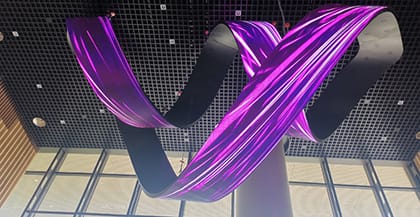
Ribbon Shaped LED Display


6. Mobius Ring and Other Custom Shapes


Flexible LED modules can also be used to develop creative structures such as Mobius rings, trumpet-shaped displays, and pop-can-shaped displays. These designs require project-specific engineering to determine module placement, structural support, and installation feasibility.


Mobius Ring LED Screen


The shapes that can be achieved depend on the selected module, its bending limits, and the design of the supporting structure. Confirming these factors early helps ensure that the proposed design is technically feasible.


Applications of Flexible LED Modules


Flexible LED modules are used in a range of commercial, cultural, educational, and public environments. The right solution depends on the intended content, viewing conditions, operating environment, and overall project requirements.


1. Shopping Malls and Retail Spaces


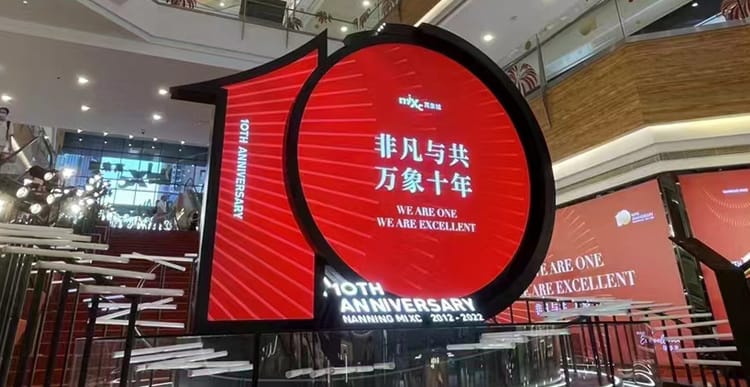
Flexible LED module installation in a retail space


Shopping malls and retail stores use LED displays to present promotional campaigns, product information, brand messages, and seasonal content. Digital displays can strengthen brand visibility, communicate offers, and create a more engaging shopping experience.


2. Exhibitions and Trade Shows


Flexible module installation in Exhibition


Exhibition organizers and exhibitors use LED displays to present products, introduce brands, share information, and communicate key messages to visitors. Display planning should account for booth dimensions, viewing distance, content requirements, installation schedules, and transportation.


3. Theme Parks and Attractions


Flexible module installation in Theme Park


Theme parks and visitor attractions use LED displays to deliver information, support themed experiences, and enhance visitor engagement. Important considerations include operating hours, environmental conditions, content updates, maintenance access, and expected operating demands.


4. Entertainment Venues


Flexible LED module installation in Entertainment Venue


Entertainment venues use LED displays for visual content, event presentations, and audience engagement. The display solution should be selected according to the venue's lighting conditions, viewing distances, content format, and operating requirements.


5. Science Museums and Cultural Attractions


Flexible LED module installation in Science Museum


Science museums and cultural venues use digital displays to communicate educational content, present exhibits, and make information more accessible to visitors. Content readability, image detail, visitor flow, and ease of updating information are important factors when planning an installation.


6. Education and Virtual Training


Flexible module installation in education and virtual training.webp


Educational institutions and training facilities use LED displays for teaching, presentations, simulation, and collaborative learning. The appropriate solution depends on room size, viewing distance, image clarity, content type, and integration with the existing audiovisual system.


7. Healthcare and Medical Facilities


Flexible curved LED display in a healthcare facility


Healthcare facilities can use LED displays for visitor information, wayfinding, educational content, and communication in designated public areas. Project teams should consider readability, operating reliability, maintenance requirements, and the environmental conditions of the installation site.


8. Banks and Corporate Environments


Flexible LED module installation in a bank


Banks, financial institutions, and corporate facilities use LED displays to communicate information, present services, reinforce brand identity, and support internal or customer-facing presentations. Content clarity, consistent performance, and integration with the surrounding environment are key selection considerations.


Before selecting a flexible LED module for any application, evaluate the required pixel pitch, brightness, installation environment, maintenance method, and project budget. These factors help determine which module series is most suitable for the intended use.


Flexible Module vs. Flat LED Module


Flexible and flat LED modules serve different installation requirements. Neither type is universally better; the appropriate choice depends on the screen design and project constraints.


ConsiderationFlexible LED ModuleFlat LED Module
Installation surfaceDesigned for specified curved configurationsGenerally intended for flat mounting surfaces
Screen shapesCurved, cylindrical, and other compatible creative formsPrimarily flat displays
Structural requirementsRequires a suitable structure for the intended curvatureRequires a suitable flat mounting structure
Design flexibilityUseful for projects with curved or irregular surfacesSuitable for conventional rectangular display layouts
Module handlingRequires attention to bending limits and flexible componentsRequires handling according to its own construction and specifications
Project planningMust account for curve geometry and module compatibilityFocuses on flatness, alignment, and cabinet or mounting design


When Should You Choose a Flexible Module?


A flexible module may be appropriate when the display needs to follow a curved surface, wrap around a column, or form a customized visual structure.


It can also be useful when a project combines curved and flat display sections, provided the selected modules are compatible.


When Is a Flat Module More Appropriate?


A flat module may be preferable for a conventional flat LED wall where the supporting structure and screen geometry do not require flexibility.


The choice should be based on the intended shape, installation method, technical specifications, maintenance requirements, and overall project cost.


For projects that combine flat and curved sections, ask the manufacturer whether the proposed module types can be integrated into a single display system.


How to Choose the Right Flexible Module


Choosing the right flexible module involves more than comparing product names or prices. The module should match the screen's dimensions, shape, viewing conditions, and installation environment.


1. Define the Intended Screen Shape


Start by identifying the required display geometry.


Is the project a simple curved wall, a cylindrical screen, a concave display, or a more complex custom shape?


Prepare drawings or reference images showing the dimensions, curve direction, and intended installation surface.


These details help the manufacturer assess which module series can accommodate the design.


2. Select the Appropriate Pixel Pitch


Consider the viewing distance and the level of image detail required.


Fine-pitch modules may be appropriate for applications viewed at relatively short distances. Displays viewed from farther away may not require the same pixel density.


The final decision should balance image quality, screen dimensions, viewing conditions, and budget.


3. Confirm Module Dimensions and Bending Limits


Check the module's physical dimensions and the permitted bending specifications.


Do not assume that two flexible modules with similar sizes can achieve the same curvature. Their structures and permitted bending ranges may differ.


Confirm whether the project requires concave or convex installation and whether the intended radius falls within the product's specified limits.


4. Evaluate the Installation Structure


The supporting structure must provide suitable stability and flatness for the selected modules.


For curved installations, the structure should be designed to follow the intended geometry without placing excessive stress on the modules.


Magnetic mounting can simplify installation on compatible metal structures, but the mounting surface and overall design still need to meet the manufacturer's requirements.


5. Consider the Operating Environment


Determine whether the screen will be installed indoors or outdoors.


Review the product's environmental ratings, brightness requirements, protection options, and maintenance recommendations.


For outdoor installations, verify the actual specifications of the selected outdoor product rather than relying solely on the fact that it is flexible.


6. Compare Available Module Series


Compare the available products according to the requirements established during the design stage.


For example:


- MP-Air: An ultra-thin indoor flexible module with a stated thickness of 4.8 mm, 26 magnetic points, and multiple pixel pitch options.

- MP: An indoor flexible LED display series listed in Meiyad's flexible LED product range.

- MX-Pro: An indoor flexible module series with a stated module size of 240 × 120 mm, a listed refresh rate of 7680 Hz, and EMC Class A certification.

- MX: An indoor flexible module series with a stated module size of 240 × 120 mm.

- MC-COB: An indoor COB flexible module series with a stated module size of 300 × 168.75 × 8 mm.

- Outdoor MS: An outdoor flexible LED module series listed in Meiyad's product range.


Each series serves a different set of requirements. Compare the current product specifications and ask the manufacturer to confirm compatibility with your project before making a final selection.


7. Discuss the Project with the Manufacturer


For customized flexible LED displays, early technical consultation can help identify design constraints before production and installation.


When requesting a recommendation, provide the following information:


- Intended application and installation environment

- Screen width, height, and overall shape

- Required curve radius or cylindrical dimensions

- Approximate viewing distance

- Preferred pixel pitch, if known

- Mounting structure and available installation space

- Relevant protection and maintenance requirements


With this information, the manufacturer can help evaluate product compatibility and recommend a suitable configuration.


Meiyad Flexible LED Module Product Series


Meiyad offers multiple flexible LED module options for indoor, outdoor, and customized display projects. The following products provide starting points for evaluating different installation and technical requirements.


MP-Air: Ultra-Thin Flexible LED Module


The MP-Air series is designed for indoor flexible LED displays where a slim module profile is important.


According to the product page, it features a 320 × 160 × 4.8 mm module size, 26 magnetic points, and pixel pitch options ranging from P1.25 to P4.


The series supports optional GOB technology and combinations of flexible and flat modules.


Learn more about the Meiyad MP-Air ultra-thin flexible LED module.


MP: Indoor Flexible LED Display Module


The MP series is part of Meiyad's indoor flexible LED display range.


It can be considered when evaluating indoor curved display projects, subject to confirmation of the module's current specifications and compatibility with the intended screen design.


View the Meiyad MP flexible LED display series.


MX-Pro: Flexible LED Module for Professional Display Applications


The MX-Pro series has a listed module size of 240 × 120 mm, a refresh rate of 7680 Hz, and EMC Class A certification according to its product page.


These specifications may be relevant when evaluating professional display projects that have particular refresh-rate or electromagnetic compatibility requirements.


Review the Meiyad MX-Pro flexible LED display module for additional product information.


MX: Indoor Flexible LED Module


The MX series is listed as an indoor flexible LED display product with a module size of 240 × 120 mm.


When evaluating this series, compare its available pixel pitch options and mounting requirements with the dimensions and curvature of the proposed installation.


Explore the Meiyad MX flexible LED screen.


MC-COB: Indoor COB Flexible LED Module


The MC-COB series provides another option for projects evaluating COB-based flexible LED display technology.


Its listed module dimensions are 300 × 168.75 × 8 mm, with pixel pitch options including P0.9375, P1.25, P1.5625, and P1.875.


The suitability of this series depends on the required resolution, screen geometry, and installation specifications.


Discover the Meiyad MC-COB flexible LED module.


Outdoor MS: Outdoor Flexible LED Module


Meiyad also lists the MS series for outdoor flexible LED display applications.


For outdoor projects, confirm the product's current environmental protection specifications, installation requirements, and compatibility with the intended operating conditions before selecting it.


View the Meiyad outdoor MS flexible LED display module.


To compare the available products, visit the complete Meiyad flexible LED screen collection.


Conclusion


Flexible modules make it possible to create LED displays that extend beyond conventional flat screen designs. From curved walls and cylindrical displays to customized retail and architectural installations, they give project designers additional options for integrating digital content into different spaces.


Choosing the right flexible module requires careful consideration of pixel pitch, module dimensions, bending limits, mounting structure, environmental requirements, and overall project objectives.


Meiyad offers several flexible LED module series for different applications, including MP-Air, MP, MX-Pro, MX, MC-COB, and outdoor MS. By comparing their specifications and discussing the intended installation with the manufacturer, project teams can identify a suitable solution for their requirements.


Planning a curved or customized LED display? Explore Meiyad's flexible LED screen solutions to review available products and discuss your project requirements with the team.


You May Also Like

Meiyad to Exhibit at ISE 2027 | LED Display Solutions

14|10|2026

Shenzhen Meiyad Optoelectronics Co., Ltd. to Exhibit at ISE 2027 in Barcelona

Shenzhen Meiyad Optoelectronics Co., Ltd., a professional LED display manufacturer with years of industry experience, will once again showcase its expertise and innovative LED display solutions at Integrated Systems Europe (ISE) 2027 in Barcelona, Spain.As one of the world’s leading events for professional audiovisual and integrated systems, ISE provides an excellent platform for industry professionals to explore the latest technologies, exchange ideas, and build global partnerships. Meiyad will welcome visitors at Hall 5, Booth 5L100, showcasing its innovative LED display solutions and brand strengths to customers and partners from around the world.Founded in 2011, Shenzhen Meiyad Optoelectronics Co., Ltd. is a national high-tech enterprise specializing in the R&D, manufacturing, sales, and service of LED display products. With operation centers and manufacturing bases in Shenzhen and Panzhihua, China, Meiyad has established a global presence, exporting its LED display solutions to more than 120 countries and regions and delivering numerous successful projects worldwide.As an experienced LED screen manufacturer, Meiyad has continuously participated in ISE for many years, using this international platform to connect with global professionals, understand market trends, and explore new opportunities for cooperation.At ISE 2027, Meiyad aims to connect with professional visitors including LED display distributors, system integrators, event solution providers, and engineering companies. Through face-to-face communication and product demonstrations, Meiyad looks forward to sharing its expertise, discussing industry needs, and building long-term partnerships with customers worldwide.“ISE has always been an important platform for Meiyad to engage with the global LED display industry. We look forward to meeting our partners and presenting our latest innovations and capabilities at ISE 2027,” said a representative of Meiyad.Visit Meiyad at Hall 5, Booth 5L100 during ISE 2027 and discover how our professional LED display solutions can support diverse applications and create new possibilities for global projects.Event InformationEvent: Integrated Systems Europe (ISE) 2027Date: February 2–5, 2027Venue: Fira de Barcelona Gran Via, Barcelona, SpainBooth: Hall 5 – 5L100

P1.875 GOB LED Touch Display Transforms Naju Cultural Exhibition in Korea

13|10|2026

How a P1.875 GOB LED Touch Display Transformed a Cultural Exhibition Experience in Naju, Korea

In today’s digital era, cultural exhibitions are rapidly evolving from traditional static displays into immersive and interactive experiences. To support this transformation, we recently completed an LED display installation project in Naju City, Jeollanam-do, South Korea, providing an advanced visual interaction solution for a local cultural exhibition space.Located approximately 400 km from Seoul, Naju is a historic city in South Korea known for its rich cultural heritage and continuous development of digital cultural experiences. Many cultural institutions in the region are adopting modern display technologies to create more engaging ways for visitors to explore history, information, and multimedia content. For this project, we supplied a GOB P1.875 fine pitch LED display with touch interaction capability, featuring a large screen size of 6 meters in width and 2.7 meters in height. The display was installed as a key visual communication platform inside the exhibition area, helping create an immersive environment for visitors.High-Resolution Visual Performance with P1.875 Fine Pixel PitchThe P1.875 LED display delivers excellent image clarity and smooth visual performance, making it suitable for close viewing distances in indoor exhibition environments.With a fine pixel pitch design, the screen can present detailed images, videos, historical materials, and interactive multimedia content with high precision. This allows visitors to experience richer visual storytelling and creates a more dynamic connection between digital technology and cultural information.For exhibition applications, image quality is especially important because visitors often view the screen from different distances and angles. The high-density LED solution ensures consistent brightness, sharp details, and a comfortable viewing experience.GOB Technology for Better Protection and ReliabilityA major feature of this project is the use of GOB (Glue on Board) LED technology.Compared with traditional LED modules, GOB technology adds an additional protective layer on the LED surface, improving resistance against dust, moisture, accidental impact, and daily wear. This makes it particularly suitable for public environments such as museums, exhibition halls, education centers, and interactive spaces where long-term reliability is essential.The enhanced protection also helps maintain stable display performance during continuous operation, supporting the demanding requirements of cultural venues.Creating Interactive Digital Exhibition ExperiencesBeyond displaying content, this LED system integrates a touch frame, enabling visitors to directly interact with the screen.Through touch interaction, users can explore digital information, navigate multimedia content, and participate in a more engaging exhibition experience. Compared with conventional displays, interactive LED solutions encourage active participation and create stronger connections between visitors and displayed content.This type of technology is becoming increasingly important in modern cultural spaces. Digital platforms and interactive installations allow museums and exhibition centers to present information in more flexible and creative ways. A Complete LED Solution for Modern Cultural SpacesThe successful installation of this 6m × 2.7m P1.875 GOB LED touch display demonstrates how fine pitch LED screen technology can support the future of digital exhibitions.By combining:- Fine pixel pitch for high-definition image quality- GOB surface protection for durability- Large-format seamless display design- Interactive touch capabilitythe solution provides a powerful platform for multimedia presentations, cultural storytelling, visitor interaction, and immersive experiences.As museums, galleries, and cultural institutions continue embracing digital transformation, interactive LED displays will play an increasingly important role in connecting technology, creativity, and public engagement.This Naju project represents another successful application of our LED display solutions in the cultural and exhibition industry, helping organizations create more innovative and memorable visitor experiences.

Send Your Inquiry Today

Factory Direct LED Screen - Fast Quote, Best Price!

Please enter your company name
Please accept the data protection information

I have read and understood the  data protection   information.