CN

×

keywords:

xxxx1 xxx2 xxx3 xx4 copy
Shenzhen Meiyad Optoelectronics Co., Ltd. Shenzhen Meiyad Optoelectronics Co., Ltd.

News

The Difference Between Indoor LED Display And Outdoor LED Display

11
08
2023

Table of Contents

You may know that LED displays are installed and controlled in different ways, but the most critical difference is indoor and outdoor. This is the first and most important step in choosing an LED display, and it will determine how you choose an LED display in the future. So how to distinguish between indoor and outdoor LED display? How should we choose?

1. What is an indoor LED display?

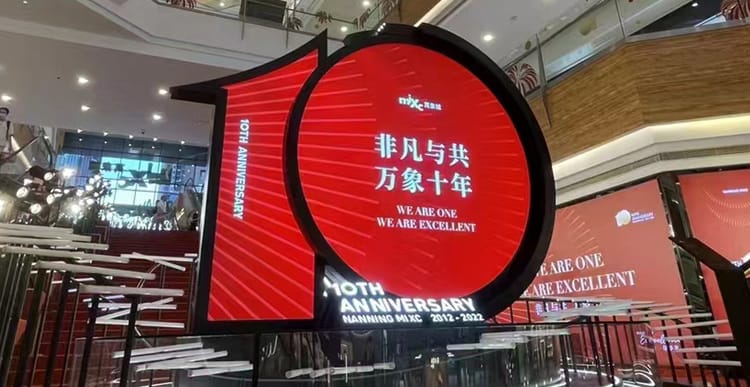
Indoor LED display refers to the LED display used indoors. For example, large-scale led display screens in shopping malls, large-scale broadcast led screens in stadiums, etc. These devices are everywhere. The size and shape of the indoor LED display is customized according to the buyer's idea. Due to the small pixel pitch of the indoor LED display, the quality and clarity of the LED display are relatively high.

2. What is an outdoor LED display?

Outdoor LED display refers to the LED display used outdoors. Due to direct sunlight or long-term exposure to sunlight, the brightness of the outdoor LED display will be higher. In addition, since outdoor LED advertising displays are usually used in large areas, their area is generally much larger than indoor led displays.

In addition, there are semi-outdoor LED displays for outdoor LED displays, which are generally installed at the door for information release and used in advertising media in retail stores. The pixel pitch is between indoor and outdoor LED display. It is often used in front of banks, shopping malls or hospitals. Due to the high brightness, the semi-outdoor LED display can be used outdoors without direct sunlight. Due to the good sealing performance, the LED display screen body is generally installed under the eaves or under the windows.

3. How to distinguish the outdoor led screen from the indoor led screen?

For users who don't know much about LED displays, there is no other way to distinguish between indoor LED displays and outdoor LED displays except to look at the installation position of the LED display.

I have summarized some differences between indoor and outdoor LED displays, which can help you better distinguish.

1) waterproof

Because the indoor LED display is installed indoors, there is no waterproof measure.

The surface of the outdoor LED display must be impervious to water. There are many outdoor LED displays installed in places that cannot be sheltered by wind and rain. Therefore, outdoor waterproofing is essential.

2) brightness

Indoor LED display brightness is low, generally 800-1200cd/m2. Since there is no direct sunlight in the room, the brightness requirement is not very high.

Outdoor LED display brightness is relatively high, generally around 5000-6000cd/m2. Since the outdoor is exposed to direct sunlight for a long time, it must have a high brightness to see a clear LED display in the sun.

Reminder: The indoor LED display cannot be used outdoor, because the brightness is too low to see anything. Similarly, outdoor LED displays cannot be used indoor. Because the brightness is too high, it will hurt the eyes.

3) Pixel pitch

The viewing distance of indoor LED display is relatively short, so there are corresponding requirements for the picture quality and clarity of the LED display. The pixel pitch of the indoor LED display is small. The smaller the dot pitch, the better the picture quality and clarity of the LED display.

The viewing distance of the outdoor LED display is relatively far, so the picture quality and clarity of the LED display are not so high. The pixel pitch of outdoor LED display is generally larger.

4) Appearance

Indoor LED displays are commonly used in places of worship, restaurants, shopping malls, workplaces, meeting spaces, and retail stores. Therefore, the usable indoor led screen cabinet will be smaller.

Outdoor LED displays are usually used in large places such as football fields or highway signs, so the outdoor LED display cabinet is larger than the indoor cabinet.

5) Adaptability to external weather conditions

In terms of adaptation to weather conditions, indoor LED displays are different from outdoor LED displays.

The indoor LED display is installed indoors and is not affected by the weather. Therefore, in addition to the IP20 waterproof rating, there is no need to take any protective measures due to changes in external weather conditions, so there is no such function.

The outdoor LED display is designed to fully adapt to various weather conditions. Outdoor LED screens are generally equipped with protective measures such as leakage prevention, dustproof, sunscreen, lightning protection, and waterproof.

4. Do you need outdoor LED screen or indoor LED screen?

"Do you want indoor or outdoor" is a question that LED display manufacturers will definitely ask you, so before answering, you need to know what conditions the LED display you want must meet.

Are you exposed to direct sunlight?

Do you need a high-definition LED display?

Is the installation location indoors or outdoors?

Once these are considered, you can decide whether you need an indoor or outdoor display.

You May Also Like

Meiyad Continues to Shine on Day 2 of SEAMEX 2026 in Malaysia

22|05|2026

Meiyad Continues to Shine on Day 2 of SEAMEX 2026 in Malaysia

Today marks the second day of SEAMEX 2026 in Malaysia, and Meiyad continues to attract strong attention from visitors, partners, and industry professionals across Southeast Asia.At Booth A033, Meiyad is showcasing a wide range of innovative LED display solutions, including the high-end SK Rental LED Screen, COB LED displays, SMD LED displays, and GOB LED display technologies. These products demonstrate Meiyad’s professional capabilities in stage rental, commercial display, cultural tourism, and immersive audiovisual applications.Throughout the exhibition, Meiyad’s booth has welcomed many customers and industry partners who showed great interest in the outstanding visual performance, seamless display quality, and creative customization solutions of our LED displays. The event also provides an important platform for Meiyad to strengthen cooperation with Southeast Asian clients and further expand our presence in the regional market.As SEAMEX 2026 enters its final day tomorrow, Meiyad warmly welcomes more visitors to Booth A033 to explore our latest LED display technologies and discuss future cooperation opportunities.We sincerely appreciate the support and trust from all customers, partners, and visitors, and we look forward to creating more innovative audiovisual experiences together.Exhibition: SEAMEX 2026Booth: A033Location: Borneo Convention Centre Kuching, Malaysia

LED Display Screen Software Installation and Debugging Tutorial

20|05|2026

LED Display Screen Software Installation and Debugging Tutorial

Software Installation, Login & Screen ConfigurationDownload & InstallationOfficial website download:Visit NovaStar official website(www.novastar-led.cn or https://www.novastar.tech) → Support → Software Download, and download the latest version of NovaLCT (recommended v5.5.0 or above).Installation steps:I. Double-click the installation package.II. Use the default installation path.III. Complete installation.IIII. Disable antivirus software temporarily to avoid accidental blockingDevice ConnectionSynchronous System (Direct Network Cable Connection)Step 1: PC → Sending Card: Connect directly via USB cable; or Connect through the same LAN using network cable. (Default IP range: 192.168.0.xxx / 192.168.1.xxx)Step 2: Sending Card → Receiving Card: Cascade via network cables. Receiving card connects to the LED screen HUB board.Asynchronous System (WiFi Direct Connection)Step 1: Connect PC/mobile phone to the player box WiFi (Default SSID: AP + last 8 digits of SN, Password can be found on the device label); or connect through the same LAN.Step 2: Connect the player box to the HUB board (receiving card) and power on.Software LoginStep 1: Open NovaLCT,Click Login→Advanced Synchronous Login,Default password:666 or admin.Step 2: Successful connection message: "Control System 1, No Display Screen"; If connection fails, check wiring and check power supply.Smart ConfigurationStep 1: After login, enter Screen Configuration → Smart Settings.Step 2: Select Chip model, Decoding method, Module size (e.g. 172x86), click Next stepStep 3: Follow the screen instructions: Bright line direction→Color matching→Pixel-by-pixel calibration, generate configuration file (.scfg).Step 4: Click Send to apply parameters to the receiving card.Manual ConfigurationStep 1: Receiving Card Parameters: Enter Receiving Card → Port Configuration → Set width, height, number of data groups, and scan mode (e.g. 1/32 scan).Step 2: Sending Card Resolution: Enter Sending Card → Output Resolution → Enter actual screen resolution (e.g. 1920×1080) → Enable scaling → Click Send.Step 3: Load Configuration File: Supports local (.scfg/.zip) or cloud configuration files. Allows quick parameter reuse. [__LINK_ICON].Program Creation & Publishing (Asynchronous System)Pingjl Installation & OperationStep 1: Download Pingjl from the official website. Double-click the installation file and follow the Pingjl. After first launch, select "Asynchronous Playback" mode. Click "Start Now".Step 2: Open Pingjl and add devices: (Search LAN/WiFi devices, Default password: admin).Step 3: Create a new program: Program Management → New Program. Set resolution matching the screen.Step 4: Add media: Support Add media, Videos (MP4/AVI), Text, Clock, Weather forecast.Step 5: Edit attributes: Playback duration, Transition effects, Loop mode, Multi-layer overlay supported.Program PublishingStep 1: Select the program→Click Publish→Select target terminal→Confirm sending.Step 2: After successful publishing, the player box automatically loads and plays the program. If publishing fails, check network connection→Check device storage.Device Management, Maintenance & Firmware UpgradeFirmware UpgradeEnter Program Upgrade→Connect to the Internet, Select cloud upgrade, Choose corresponding sending card / receiving card firmware, Wait for completion, Do not power off during upgrade.Offline Upgrade:Import local firmware package (.bin), batch upgrade devices:Step 1: Login through "Login → Advanced Synchronous Login",enter password admin or 666. (For asynchronous products (JT/TB series), select Media Player Login)Step 2: Type "admin"or "666888" on the main interface.Step 3: Select communication port. If you need to reconnect the sending card, click "Reconnect".Step 4: Select the range to view, click "Refresh" to view the current software version of the hardware.Refresh All: View all sending/receiving card versions.Specified Refresh: View the software versions of the specified sending and receiving cards.PS: Simply click "Refresh All" on the screen to view the receriving card model and firmware version.Identifying Driver & Decoder Chips:Please refer to the information on the back of the module or on the packaging (you may also contact the relevant project manager for confirmation)Check IC markings on the back of the moduleObtain information according to the correct configuration file provided by the manufacturer:Step 1: In the "Screen Configuration" dialog box on the main LCT interface, select the "Receiving Card" tab.Step 2: Load the correct configuration file provided by the screen manufacturer from the local computer:a. Click "Load from Local";b. Select the configuration file and click "Open";c. After the file is successfully loaded, click "OK".Step 3: Click "View Cabinet" to check the information in the pop-up dialog box.Obtain the Corresponding Correct Firmware Program:You can directly access the public resources through the following links:Novastar Database http://gts.novastar.tech:6150/sharing/oLGDYny5ENovastar Overseas Database http://gts.novastar.tech:6150/sharing/CZRitU08hStep 1: Directly access the Nova database mentioned above.Step 2: From the homepage, follow the path:"Firmware Program > Receiving Card”to enter the receiving card model classification page.Step 3: According to the Nova receiving card model confirmed above, enter the corresponding receiving card page. The following examples use DH-LCE7516 / FS-LCE7516 / MRV416.Step 4: According to the confirmed driver IC and decoder IC used on the module, search for the corresponding firmware in the order of 1, 2, 3, and 5.(Option 4 is firmware for the 99-series chips, and 99-series chips can be searched directly.)OverviewUsing the example above, each folder contains the corresponding firmware and descriptions of the supported chips. You can check the descriptions to identify the driver IC and decoder IC used on your module, and then determine which firmware should be used.Based on the confirmed Nova receiving card model and the driver/decoder ICs used on the LED module, you can find the correct corresponding firmware.Screen MonitoringMonitoring → Device Status:Check temperature, voltage, network cable connection, signal source, and abnormal alarm notifications.Preset Screen: Tools → Preset Screen SettingsSet the display image when the signal is lost or disconnected (such as black screen or fixed logo).TroubleshootingUnable to connect to the deviceCheck USB/network cable, power supply, and IP segment; disable the firewall.Screen garbled/flickeringVerify receiving card parameters, network cable quality, and HUB board (receiving card) wiring; resend the configuration.Program playback abnormalCheck media format and resolution compatibility; restart the player box or republish the program.

Send Your Inquiry Today

Factory Direct LED Screen - Fast Quote, Best Price!

Please enter your company name
Please accept the data protection information

I have read and understood the  data protection   information.